
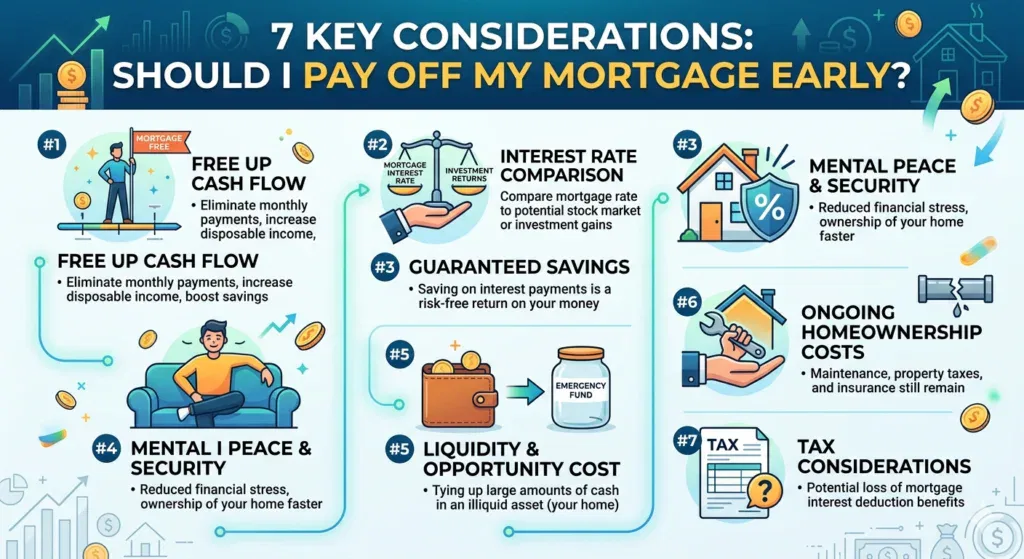
Paying off a mortgage is a milestone many homeowners dream of. The idea of being debt-free, owning your home outright, and freeing up monthly cash flow is undeniably appealing. But the decision isn’t as simple as it sounds. The question “should I pay off my mortgage?” depends on personal finances, interest rates, investment opportunities, tax implications, and long-term financial goals. In this comprehensive guide, we will explore the nuances of this question, weighing the pros and cons to help you make an informed decision.
Understanding Mortgage Basics
Before asking “should I pay off my mortgage,” it’s important to understand what a mortgage is and how it works. A mortgage is a loan taken to buy a home, typically repaid in monthly installments that include both principal and interest.
| Component | Description |
|---|---|
| Principal | The original amount borrowed from the lender |
| Interest | The cost of borrowing, usually expressed as a percentage |
| Term | The length of the loan, often 15, 20, or 30 years |
| Escrow | Accounts for taxes and insurance (sometimes included in monthly payment) |
Understanding these components is critical because each plays a role in determining whether paying off your mortgage early makes financial sense.
Pros of Paying Off Your Mortgage
When you consider “should I pay off my mortgage,” there are several clear benefits:
- Debt-Free Homeownership
Eliminating mortgage payments removes a major monthly obligation, giving peace of mind and financial freedom. - Interest Savings
Paying off a mortgage early can save thousands in interest over the life of the loan. - Increased Cash Flow
Once the mortgage is paid off, your monthly cash flow increases, which can be redirected to savings, investments, or lifestyle expenses. - Reduced Financial Stress
For many, the psychological burden of mortgage debt can be substantial. Paying off the loan often reduces stress and anxiety. - Retirement Planning
Retiring without mortgage payments can significantly reduce the amount you need to maintain your lifestyle.
Cons of Paying Off Your Mortgage Early
While the benefits are attractive, there are also drawbacks to consider:
- Opportunity Cost
The money used to pay off a mortgage could potentially earn higher returns in the stock market, retirement accounts, or other investments. - Liquidity Concerns
Once you pay off a mortgage, that cash is tied up in your home. You cannot easily access it in case of emergencies unless you take a home equity loan or line of credit. - Tax Deductions
Mortgage interest can sometimes be tax-deductible. Paying off a mortgage early may eliminate this deduction, although recent changes in tax law have limited these benefits for many homeowners. - Inflation Hedge
Fixed mortgage payments can act as a hedge against inflation. Over time, as salaries rise, the real cost of your mortgage payments decreases.
Financial Calculations: Is It Worth It?
When considering “should I pay off my mortgage,” it’s useful to run some calculations. Let’s look at an example:
| Mortgage Amount | Interest Rate | Term Remaining | Monthly Payment | Interest Remaining |
|---|---|---|---|---|
| $200,000 | 4% | 20 years | $1,212 | $131,000 |
If you paid an extra $500 per month, you could pay off the mortgage in approximately 11 years instead of 20, saving nearly $50,000 in interest.
Formula to Estimate Savings
- Remaining Interest = Mortgage Balance × Interest Rate × Remaining Term
- Early Payoff Interest = Adjusted Principal × Interest Rate × New Term
By comparing these two, you can determine if early payoff is financially beneficial.
Should I Pay Off My Mortgage vs. Investing?
One of the biggest dilemmas is whether to pay off your mortgage or invest the extra funds.
- Paying Off Mortgage: Guaranteed return equal to your mortgage interest rate (e.g., 4%).
- Investing: Historical average stock market returns range from 7–10% annually.
A simple rule of thumb: if your mortgage rate is below potential investment returns after taxes, investing may make more sense.
| Option | Potential Return | Risk Level | Liquidity |
|---|---|---|---|
| Pay Off Mortgage | 4% (interest saved) | Low | Low |
| Stock Market | 7–10% | Moderate | High |
| Bonds / ETFs | 3–5% | Low-Moderate | High |
Emotional and Lifestyle Factors
Financial calculations alone don’t answer the question “should I pay off my mortgage.” Emotional and lifestyle considerations matter too:
- Peace of Mind: Owning your home outright may bring psychological comfort.
- Retirement Security: Mortgage-free retirement can simplify your budget.
- Family Planning: Reducing debt can free up cash for children’s education or other goals.
Many homeowners prioritize emotional security over small financial gains from investment.
Alternative Strategies
If you’re unsure about paying off your mortgage completely, consider these alternatives:
- Extra Monthly Payments
Make small additional payments toward the principal. Even $100–$200 extra per month can shorten the term and reduce interest. - Biweekly Payments
Splitting monthly payments into biweekly installments can effectively make one extra payment per year. - Refinancing
Refinancing at a lower rate can reduce your interest burden while keeping liquidity. - Partial Lump Sum
Paying a lump sum toward principal without eliminating the mortgage entirely can offer both interest savings and flexibility.
Factors to Consider Before Making a Decision
Ask yourself these questions:
- What is my mortgage interest rate?
- How stable is my income?
- Do I have emergency savings?
- Am I on track with retirement contributions?
- Would investing the extra funds yield higher returns than interest savings?
- Do I value psychological security over financial gain?
Answering these can clarify whether paying off your mortgage is the right choice.
Should I Pay Off My Mortgage: Tax Implications
The tax implications depend on where you live and your deductions. Mortgage interest is often deductible, which can reduce the net cost of keeping the mortgage. However, under recent tax laws, standard deductions have increased, meaning fewer homeowners benefit significantly from this.
Case Studies
Case 1: Low Interest Rate, High Investment Returns
- Mortgage: $250,000 at 3.5%
- Investments: Stock market returns ~8%
Decision: Investing may yield higher long-term gains than early mortgage payoff.
Case 2: High Interest Rate, Risk-Averse
- Mortgage: $200,000 at 6.5%
- Investments: Moderate risk tolerance
Decision: Paying off the mortgage early is likely financially beneficial.
Pros and Cons Summary Table
| Pros | Cons |
|---|---|
| Debt-free home | Opportunity cost of investments |
| Interest savings | Reduced liquidity |
| Increased cash flow | Loss of potential tax deductions |
| Peace of mind | Less inflation hedge |
| Retirement flexibility | Less leverage for high-return investments |
FAQs: Should I Pay Off My Mortgage?
Q1: Is it better to pay off my mortgage or invest?
It depends on your mortgage rate, risk tolerance, and investment opportunities. Lower rates may favor investing, while high rates often favor paying off the mortgage.
Q2: Can paying off my mortgage early affect my taxes?
Yes, you may lose mortgage interest deductions, but the impact varies depending on your filing status and other deductions.
Q3: What if I have extra savings but also retirement debt?
Consider balancing both: maintain emergency and retirement funds while paying extra toward principal.
Q4: Will paying off my mortgage improve my credit score?
It may reduce your credit utilization ratio, but credit history length and timely payments have a greater effect.
Q5: Can I pay off a mortgage partially?
Yes, extra principal payments reduce interest costs and shorten the term without fully paying off the loan.
Conclusion
The question “should I pay off my mortgage” has no one-size-fits-all answer. It depends on interest rates, investment opportunities, tax considerations, personal goals, and emotional comfort. By analyzing your financial situation, calculating potential interest savings, and weighing emotional benefits, you can make an informed decision.
For many, a balanced approach—paying extra toward the principal while investing in retirement accounts and maintaining liquidity—offers both financial growth and peace of mind. Ultimately, the best choice aligns with your long-term financial security and lifestyle goals.